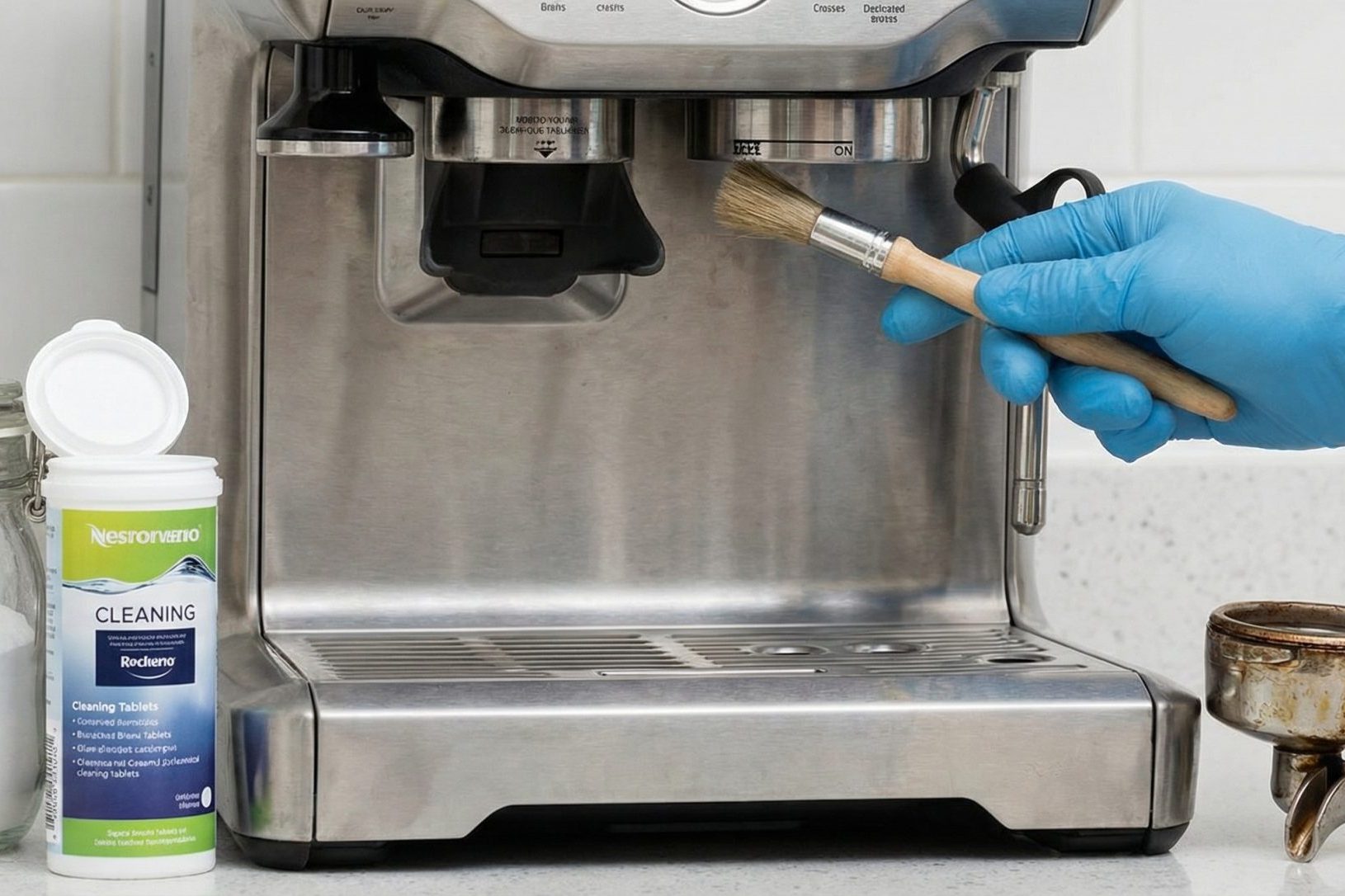
How To Clean Your Bean-to-Cup or Espresso Machine (Without Being Rinsed by OEM Prices)
Here’s a cheerful little reality check: your trusty bean-to-cup or espresso machine—the one you lean on through early-morning fog and mid-afternoon slumps—is quietly collecting grime, oil and limescale behind the shiny front.
I found this out the other week when I stripped down my Jura bean-to-cup machine for a proper clean and used the chance to upgrade the burrs. From the outside it looked fine. Inside? Different story. Old oils, compacted coffee, general gunk. Classic case of: just because you can’t see the dirt on a coffee machine doesn’t mean it isn’t there.
So, what should you actually use to clean it? And do you really need those official OEM (Original Equipment Manufacturer) cleaning products with the premium price tags? Let’s give your cleaning routine a bit of common sense and save a bit of cash while we’re at it.
Why Bother Cleaning Your Coffee Machine?
If your flat whites have started tasting a bit “off”, that’s your machine quietly asking for help.
Inside, a few things build up over time:
-
Coffee oils stick to the brew chamber and spouts and go rancid, giving you that stale, muddy taste.
-
Old grounds hide in awkward corners and slowly rot.
-
Limescale from hard water clogs pipes and boilers, making the machine work harder and heat less efficiently.
Leave all that to stew and you’ll get:
-
Flavours that are dull, bitter or just plain weird.
-
Inconsistent shots and milk that doesn’t texture properly.
-
A machine that gives up the ghost far earlier than it should.
Cleaning isn’t just being fussy – it’s basic maintenance. Think of it like changing the oil in a car. No one gets excited about it, but you definitely notice if you never do it.
My Jura Clean-Up (and Burr Upgrade)
When I finally pulled my Jura apart properly, it was both satisfying and slightly horrifying. From the outside, it was the same friendly box it’s always been. Inside, the brew unit and chute were coated in old coffee oils and dust. Nothing dramatic, but enough to explain why the flavour had slowly gone from “nice” to “meh”.
A deep clean meant:
-
Taking the whole unit apart the case the head and grinder
-
Flushing through a proper cleaner, not just water
-
Cleaning all the bits coffee actually touches, not just the water tank
Since I was in there anyway, I upgraded the burrs. That’s the bit that actually grinds the beans, so it’s like putting a fresher engine into an old car. The combo of new burrs + clean internals made a huge difference: brighter flavour, better aroma, and shots that actually tasted like the beans I thought I was buying and roasting.
That’s the hidden danger with coffee machines: if you only judge by the outside, you miss the quiet decline happening inside.
What Cleaning Agents Should You Use?
There’s a ridiculous amount of choice out there: tablets, powders, liquids, magic potions. Underneath the branding, most of it falls into three simple categories.
1. Descaling Solutions (for limescale)
Descalers deal with mineral build-up in the boiler and internal pipes.
Common options:
-
Citric acid solutions – gentler, often used for domestic machines.
-
Stronger proprietary descalers – often based on lactic or other acids for heavier build-up.
How often?
-
As a rough rule: every 3 months.
-
If you live in a hard-water area (hello, London), monthly isn’t over the top – especially for bean-to-cup machines that heat a lot of water.
2. Cleaning Tablets (for coffee oils and gunk)
Cleaning tablets tackle coffee oils and old residue inside the brew unit and coffee path.
-
Pop a tablet in where your machine specifies and run the cleaning cycle.
-
They’re designed to dissolve slowly and pull off the oily build-up that water alone won’t touch.
Aim for:
-
About once a week if you’re using the machine daily.
-
Or follow the machine’s usage-based reminder if it has one.
3. “Home Remedy” Options (like vinegar)
Vinegar-and-water solutions can descale, but they’re:
-
Smelly
-
Harder to flush out properly
-
Sometimes not recommended by manufacturers
You absolutely must rinse thoroughly afterwards, otherwise your next latte will have a charming hint of chip shop about it. It can work in a pinch, but it’s not my go-to for a modern bean-to-cup machine.
Are OEM Cleaning Products Worth the Money?
Now to the bit that stings: OEM tablets and descalers.
The upsides:
-
They’re formulated for your specific brand and machine.
-
Instructions are dead simple and matched to the cleaning cycles.
-
They keep the manufacturer happy, especially while the machine is still under warranty.
The downsides:
-
The price. Those little branded tablets add up quickly.
Here’s the pragmatic view:
-
Check your warranty. If it explicitly says you must use OEM products, it’s safer to stick with them while the warranty’s active.
-
After that, good-quality generic cleaners will do the same job for less. Plenty of third-party tablets and descalers are designed for espresso machines and work perfectly well.
You don’t need to pay for a logo on a bottle to get a clean machine. Just make sure whatever you use is food-safe and designed for coffee equipment.
A Simple Cleaning Routine That Actually Works
You don’t need a spreadsheet or a laboratory schedule. Something like this will keep most home machines in good nick:
-
Daily:
-
Empty and rinse the drip tray and used coffee grounds container
-
Wipe the exterior and any milk spouts/wands
-
-
Weekly:
-
Run a cleaning tablet cycle (for coffee oils)
-
Give the brew unit a proper rinse (if it’s user-removable)
-
-
Monthly / Quarterly (depending on water hardness):
-
Run a descale cycle with a proper descaling solution
-
And once in a while, like I did with the Jura, commit to a proper deep dive: pull out what you can, clean everything that actually touches coffee or water, and if your machine allows it, consider refreshing the burrs after a few years. It’s far cheaper than a new machine and can totally transform the flavour.
Refurbishing a Jura E8
Here is the video that I followed to clean my E8. Not for the faint hearted!
Conclusion
Good coffee isn’t just about beans and grind size. It’s also about what’s lurking inside the machine doing the hard work.
-
OEM cleaning products can be handy and safe, but they’re not the only way to keep your machine healthy.
-
Generic cleaners are fine once you’re out of warranty, as long as they’re designed for coffee kit.
-
The real magic is regular cleaning, not fancy branding.
So next time your machine is quietly getting on with its job, remember: if you can’t see any dirt, that doesn’t mean it’s not there. Give it a clean, refresh those burrs when you can, and you’ll get better flavour, a happier machine, and fewer “why does this taste weird?” moments in the morning.