A post appeared on the Coffee subreddit recently that stopped us mid-sip. A person was asking for advice on behalf of their partner, who has low vision, and wanted to know which coffee brewing methods are actually manageable — safe, repeatable, not dependent on reading tiny markings or staring at a kettle.
It’s a genuinely good question, and one that doesn’t come up often enough in coffee circles, which tend to get a bit obsessed with precision and visual feedback. So here’s our honest take.
The main challenges
Most brewing guides assume you can see. Read the water level on a gooseneck kettle. Watch a bloom expand. Check a digital scale display. For someone with low or no vision, these steps range from fiddly to impossible — and a few carry real safety risks, like pouring boiling water without being sure where the cup actually is.
So the goal is to find methods that are repeatable by feel, sound and routine rather than sight.
Methods worth considering
The AeroPress comes up a lot in these conversations, and for good reason. It’s tactile, hard to break, and the process is forgiving — you’re not pouring in multiple stages or chasing a specific flow rate. Press down, you’re done. With a bit of practice, the steps become muscle memory.
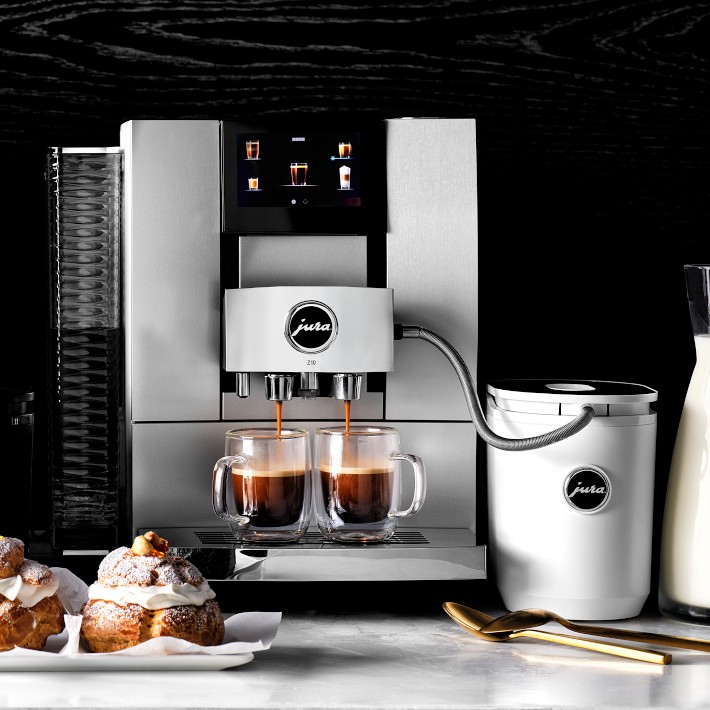
A pod or capsule machine isn’t our personal favourite from a coffee-quality standpoint, and we’ll be honest about that. But for accessibility, they’re hard to argue with. One pod, one button, same result every time. No loose grounds, no kettles, minimal variables.
A drip coffee maker with a built-in grinder and programmable settings can also work well once it’s set up. The key is finding one with tactile or clearly differentiated buttons rather than a smooth touchscreen, which is almost useless without sight.
French press is manageable, but involves pouring boiling water freehand — that’s worth thinking carefully about. A gooseneck kettle with a built-in thermometer that beeps at temperature, combined with a kettle rest or pouring guide, can help.
Gear that actually helps
- Talking scales — these exist, and they’re a game-changer. You can weigh coffee and water by ear rather than eye.
- Tactile measuring scoops — a consistent scoop takes the guesswork out of dosing.
- A kettle with an audible temperature alert — knowing when the water’s ready without hovering over it.
- A cup positioning mat or tray with raised edges — keeps everything in a known spot so you’re not searching around with boiling water in hand.
On the coffee itself
One thing that rarely gets mentioned: freshness matters more when you’re simplifying the process elsewhere. If you’re using a basic method or a pod machine, starting with coffee that’s actually fresh — roasted recently, not sat in a warehouse for months — means you’re not fighting the beans on top of everything else.
Pre-ground is a perfectly reasonable choice here too. Grinders add noise, moving parts, and another step. A good pre-ground coffee, used within a few weeks of roasting, will still make a cracking cup.
The wider point
Coffee culture can be a bit gatekeep-y about method. Pour-over or nothing. Weigh everything to the decimal point. It’s all well-intentioned but it does sometimes obscure the fact that a great cup of coffee should be accessible to everyone — whatever that looks like for them.
The best brewing method is the one that works for your life. Full stop.