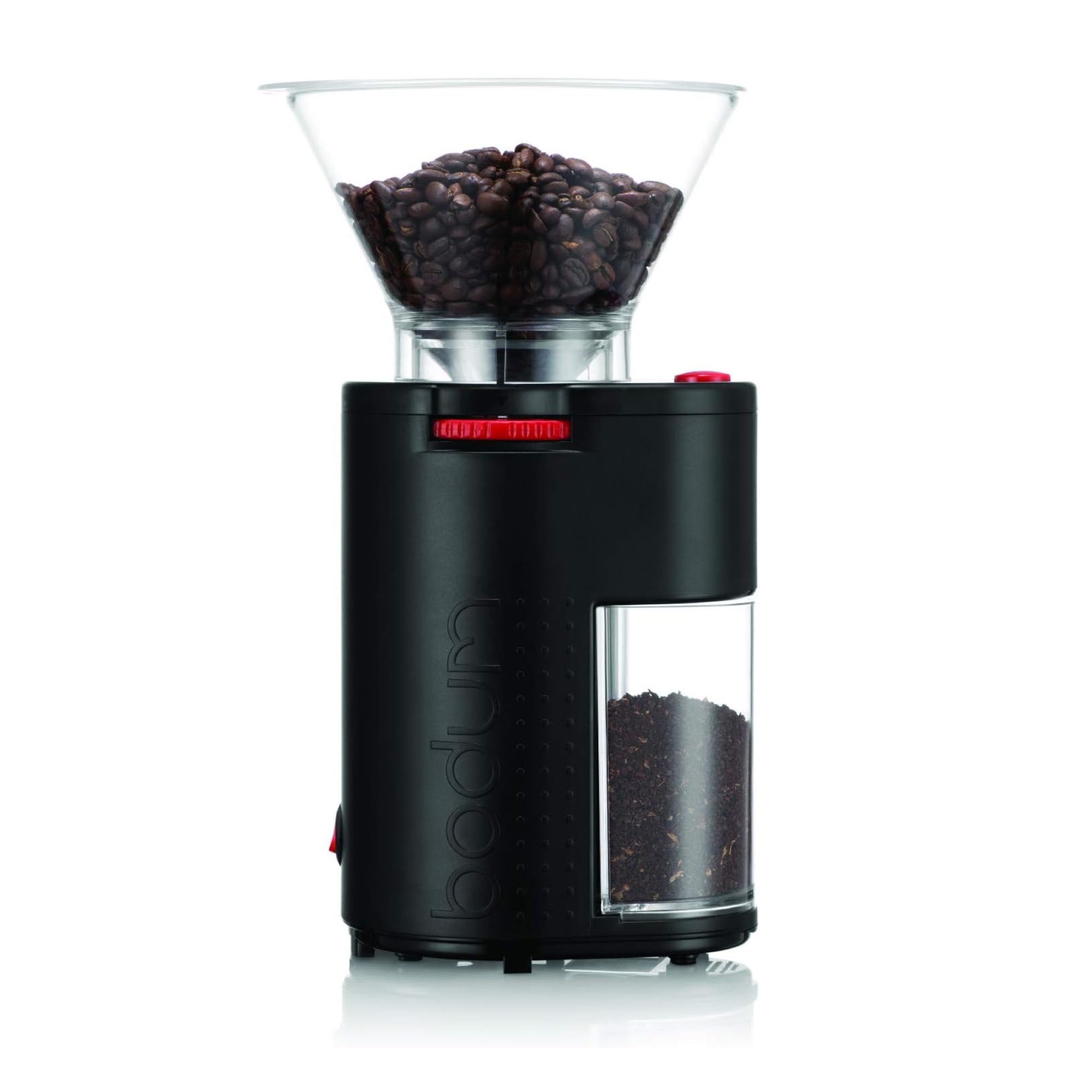
Picking your first coffee grinder is one of those decisions that feels like it should be simple and somehow isn’t. There are hundreds of options, forums full of conflicting opinions, and a dizzying amount of jargon. So let’s cut through it.
First, the thing that matters most: a decent grinder will improve your coffee more than almost anything else you can do. More than a fancy kettle, more than filtered water, more than an expensive brewer. Fresh, evenly ground coffee is the foundation. Everything else is detail.
Blade grinder or burr grinder?
You’ll likely come across blade grinders — the ones that look like a tiny food processor, with a spinning blade that chops the beans. They’re cheap and widely available. They’re also not really grinders in the true sense. They hack beans into uneven chunks, which means some bits brew fast and some brew slow, and you end up with a muddy, inconsistent cup. Avoid them if you can.
A burr grinder is different. It crushes beans between two abrasive surfaces (the burrs), producing grounds that are much more uniform in size. Consistent grounds mean consistent extraction, which means better-tasting coffee. That’s the whole game.
Hand grinder or electric?
If budget is tight — and it often is when you’re starting out — a hand grinder is the honest answer. You can get a genuinely good one for £30–50. Yes, you have to crank it yourself. For one or two cups in the morning it takes maybe a minute, which is fine. It’s actually a decent way to wake up.
Electric grinders are more convenient, obviously. But the cheap ones (under about £50) are often not much better than a blade grinder in practice. If you’re going electric, you generally want to spend a bit more to make it worth it.
What are you brewing?
This matters more than people think. Different brew methods need different grind sizes:
- Cafetière (French press) — coarse, like rough sand
- Filter / pour-over — medium, like table salt
- Moka pot — medium-fine
- Espresso — very fine, like powdered sugar
Most hand grinders and mid-range electric burr grinders handle filter methods brilliantly. Espresso is more demanding — the grind needs to be very precise and consistent — and that’s where cheaper grinders tend to struggle. If espresso is your goal from day one, you’ll need to spend more, or accept some compromise early on.
A reasonable place to start
For most people brewing at home with a cafetière, a pour-over, or an Aeropress, something like the Timemore C2 or C3 hand grinder is a solid entry point. There are others in that bracket worth looking at too — the 1Zpresso Q2, the Hario Slim. They all do the job well without costing a fortune.
If you want to go electric straight away, the Baratza Encore is a long-standing recommendation for good reason. Reliable, consistent, repairable. It’s not cheap, but it’s the kind of thing you buy once.
One last thing
Whatever grinder you land on, pair it with fresh coffee and you’ll notice the difference immediately. Coffee that was roasted recently and ground just before brewing is a different drink to pre-ground from a supermarket shelf. That’s not snobbery — it’s just how it works. The grinder is your first step, and fresh beans are the second.
Start there. You can complicate it later if you want to.